Mobile
Consumer
Designed an event-trading app for 40K new users.
Dec 16, 2025

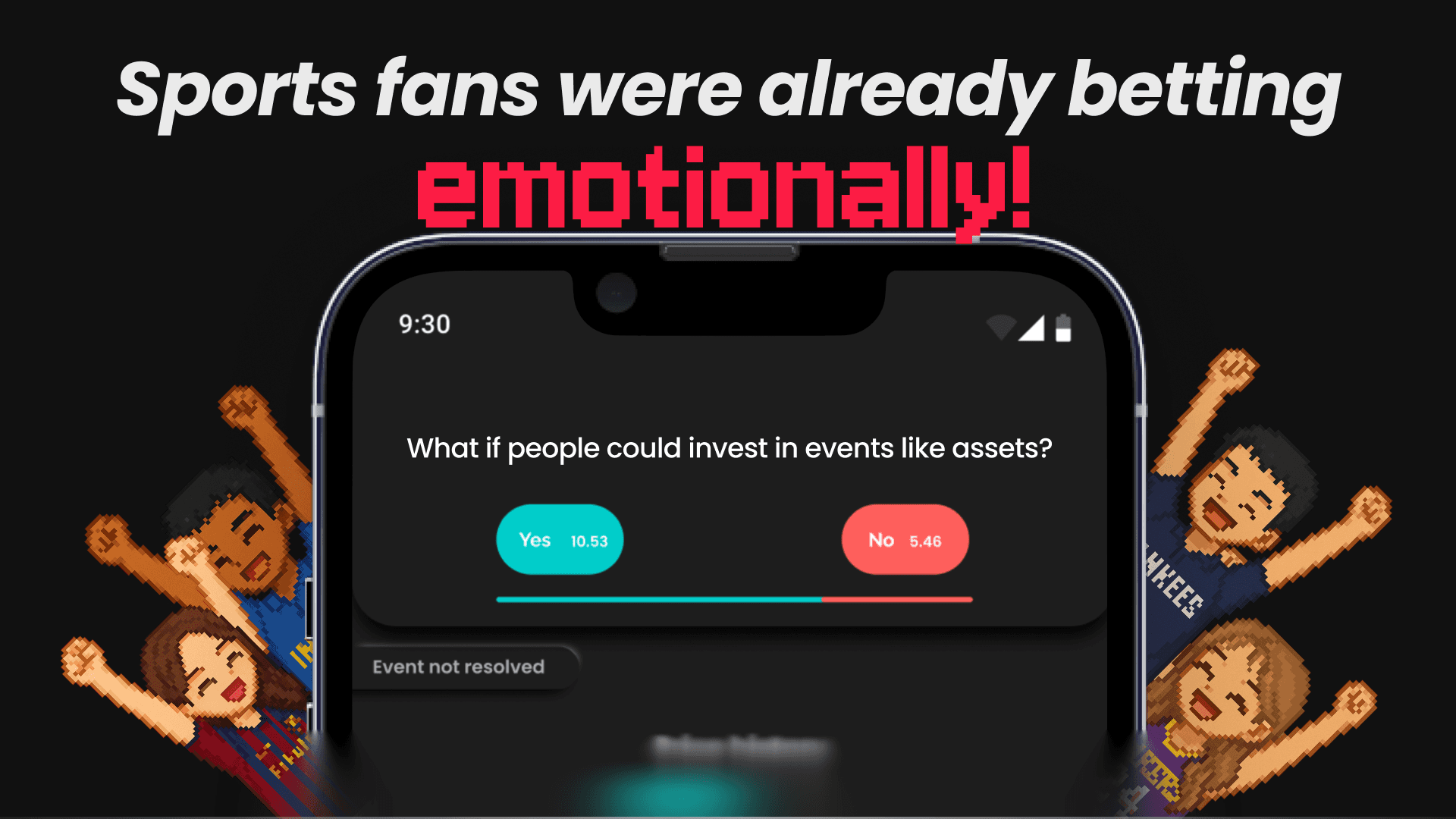
But....
Back story:
Months prior to Craze, the founders ran a Discord server where members wagered points on live events while the team manually managed trades and prizes. It was their way of testing how prediction-driven communities behave in real time.
As the experiment gained momentum, I joined as the designer to help shape that early chaos into a coherent mobile experience, one that made ‘trading on events’ simple, structured, and engaging.

Early goal:
Migrate ~200 Discord users to a dedicated mobile platform with structured, event-based trading flows.
Streamline navigation and introduce clear divisions by event type and timing.
Build a foundation for scalable discussions and trades around real-world events.
Outcome: Grew to 40,000+ users within the first few months post-launch.

User Observation & Insights
Leveraging Craze’s existing Discord community as an observation ground provided valuable understanding of how users interacted with event predictions through command-based bots.
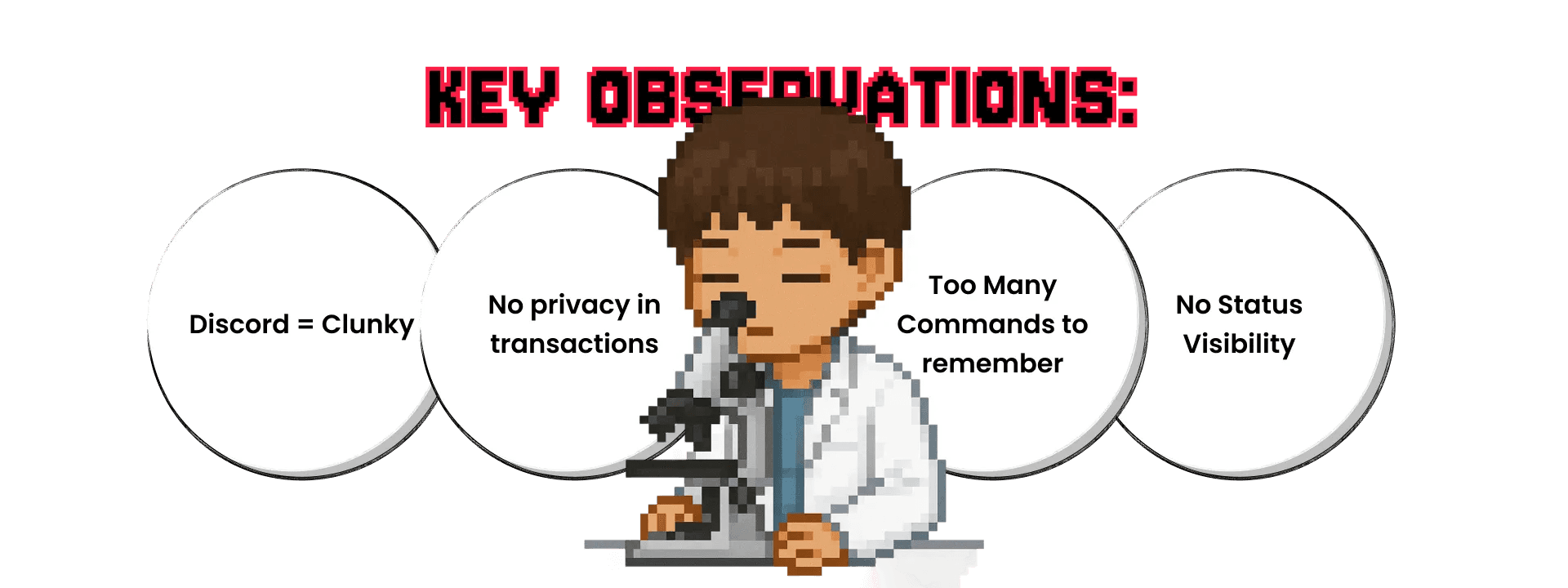
These insights guided the move from a fragmented, bot-driven experience to a cohesive, visual trading environment that felt intuitive and rewarding.
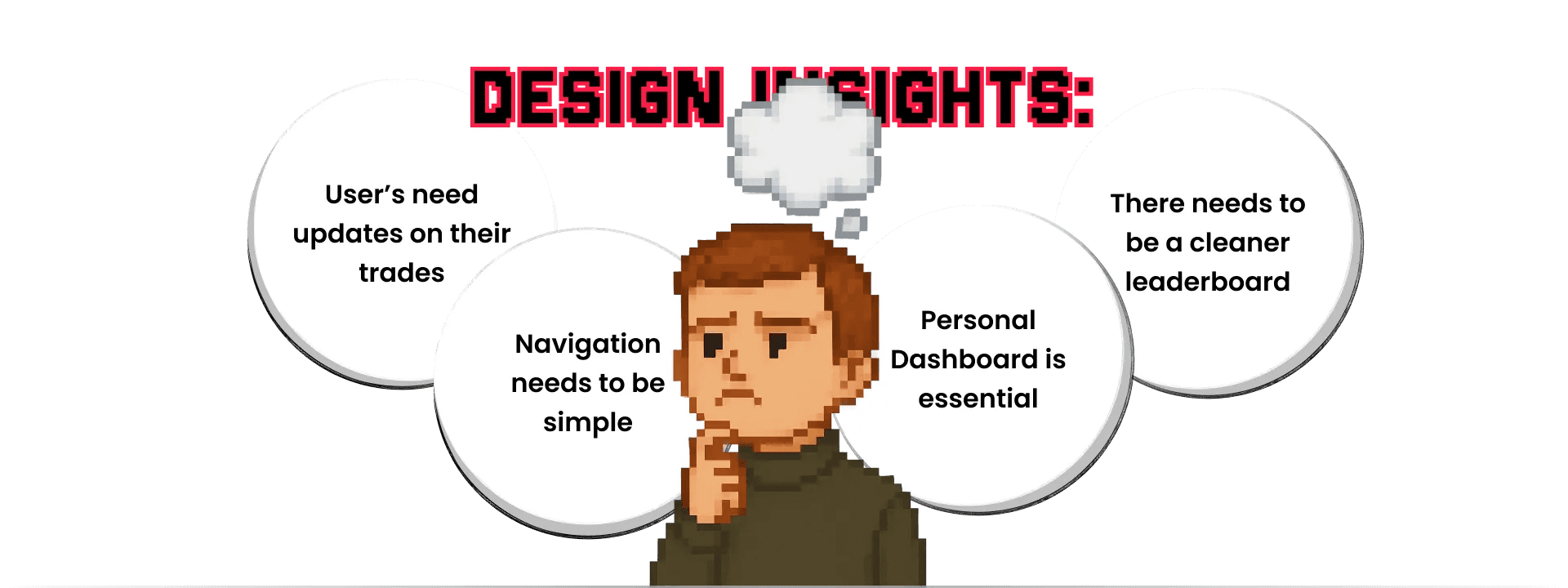
Competitor Research
Design Benchmarking: Apps like Robinhood and Kalshi informed the approach to clarity, modularity, and trust cues — but Craze differentiated itself by combining these with social engagement loops drawn from community behavior on Discord.
User Personas
The most engaged members of the Discord community (around 10 folks) acted as a reference to our user persona, as they represented the core power users of the product.
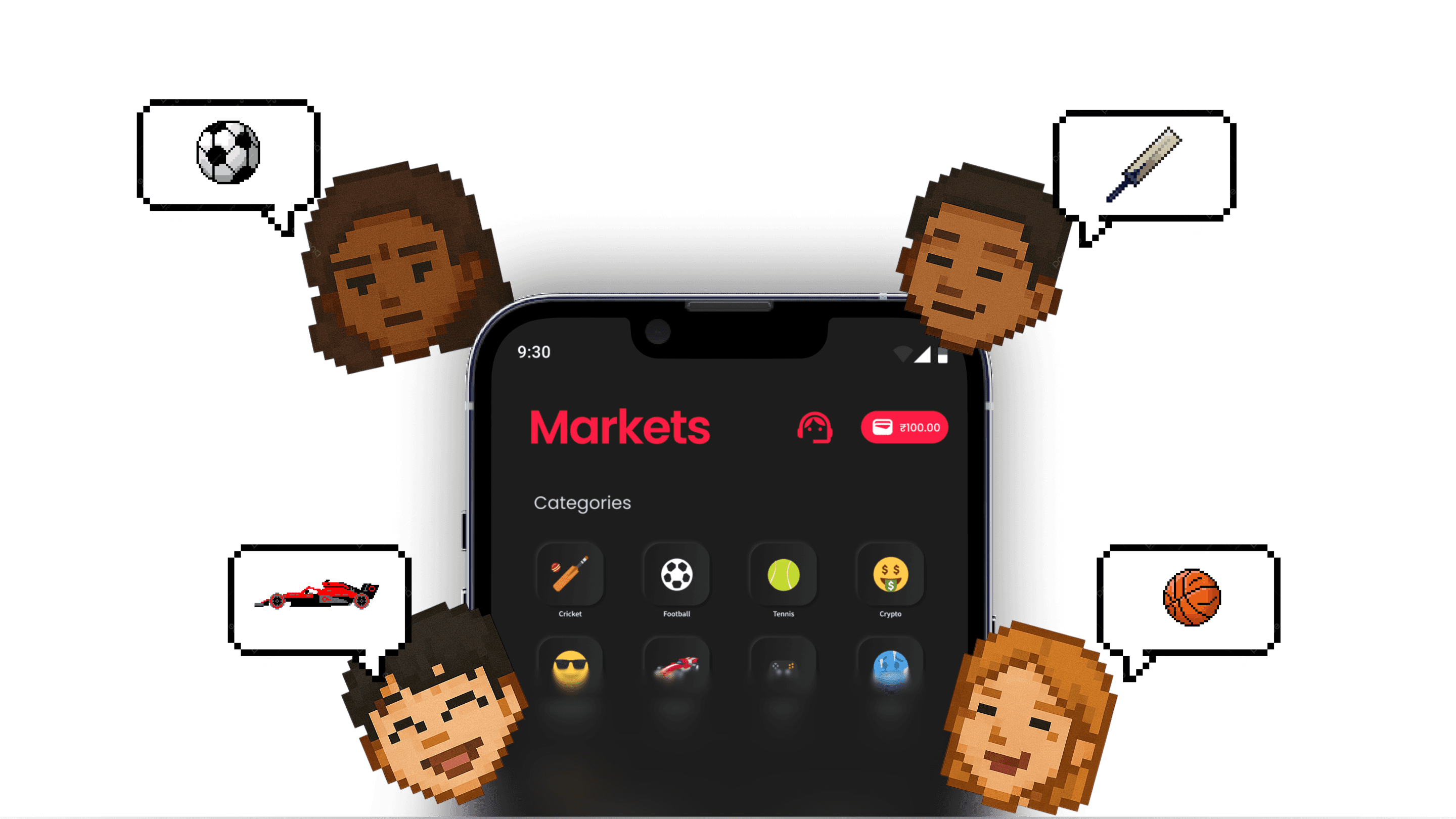
Design Choices:
The MVP:
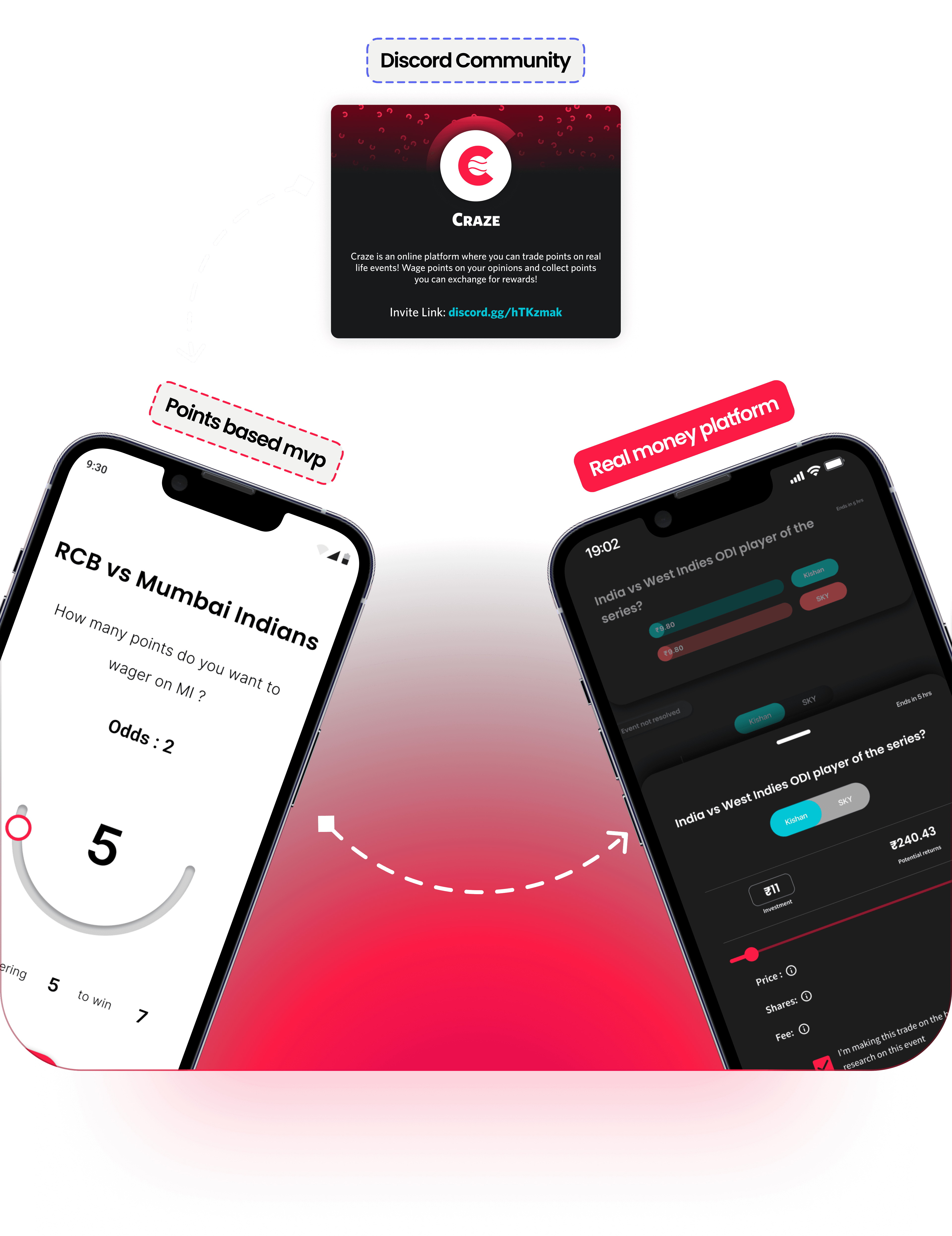
The app was designed with a light theme, focused on providing an easily navigable platform for the early adopters migrating from Discord. We included referral programs in order to grow the user base via incentivized word-of-mouth.
The first app went out as an APK file that the users could install from our website.

The Real Money App:
After exploring various visual styles, we decided on a sleek, dark-themed interface and followed patterns based on popular stock-broking apps we referred to in the research phase.
The dark theme was chosen to enhance readability and create a sophisticated look and feel. We also opted for neuomorphism for a visually engaging and modern aesthetic.
We iterated on these designs based on the feedback from the Discord community, ensuring the design was both visually appealing and easy to navigate.
Playstore Release:
The Release:
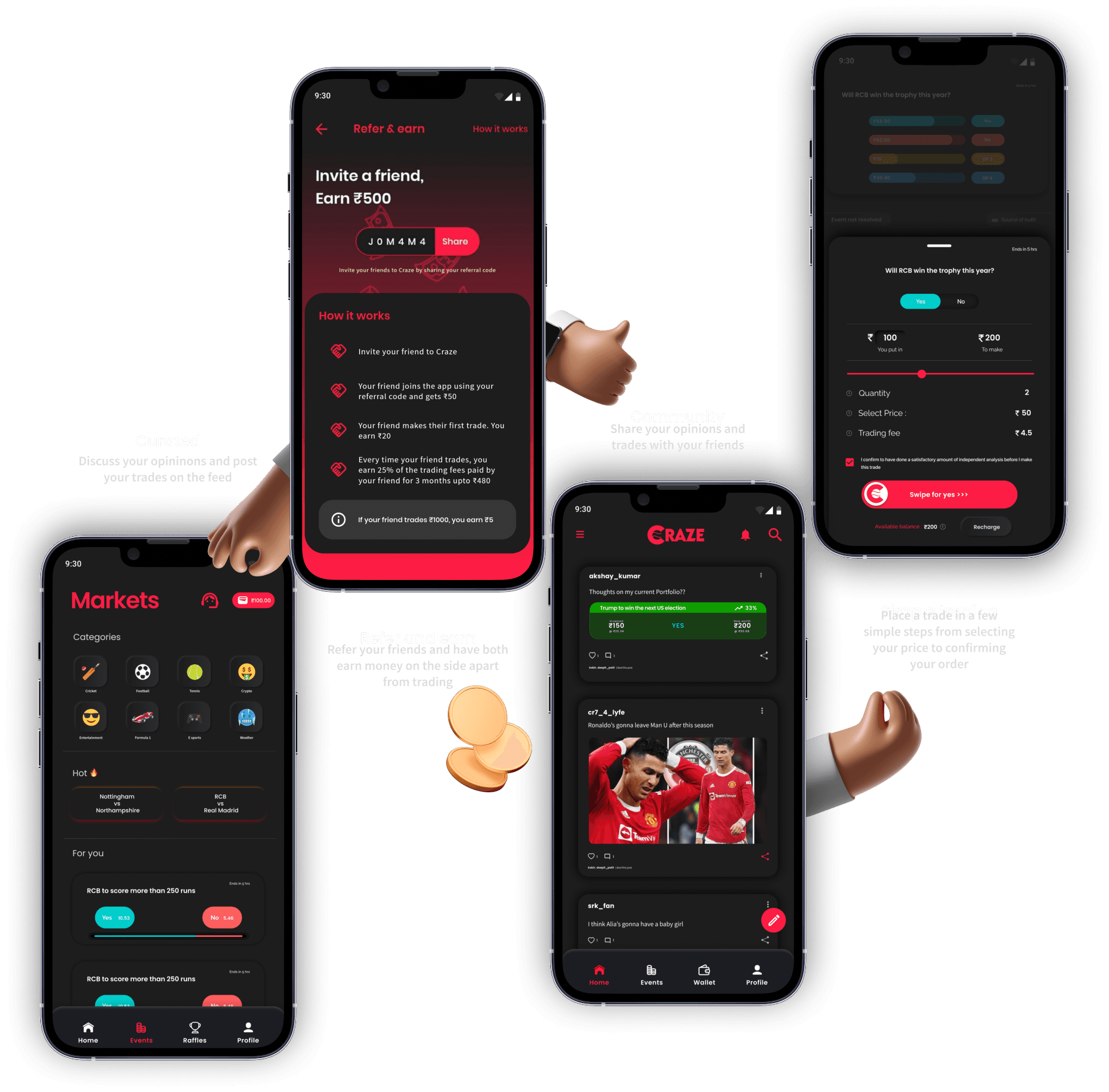
We finally released the App on the Play-store & the App-store!
Users could install the app, onboard in a few simple steps and get ₹50 as bonus to make their first trade!
A major issue this helped us overcome, was the under-involvement of iOS users in the MVP crowd as they couldn't install applications with an APK file.
What happened after:
As users grew, our analytics painted a better picture of how unique users perceived the platform and where the pitfalls existed.
While we received overwhelmingly positive feedback from users, the project eventually concluded due to market forces and factors outside our control.

Reflections
This project significantly enhanced my skills in user-centered design and the importance of close collaboration with developers. It reinforced the value of iterative design and continuous user feedback.
If I were to work on a similar project again, I would allocate more time for user research early in the process to comprehensively understand user behaviours and try to read between the lines of their actions and claims.
Despite the project's premature conclusion, I'm incredibly proud of our creation. The user feedback validated our efforts and demonstrated the app's potential to revolutionize opinion trading interactions at a social level.
I gained valuable experience collaborating within a small team, constantly refining our product, and learning to navigate the complexities of balancing functionality and aesthetics.